3 Thoughts on How Technologies Shape Online Communication and Socialization
This Sunday morning, an analysis report popped out to my cellphone’s screen. It happens every week, telling me how much time I spent on my phone during the past week. It is at this moment that I realize that my interactions with people via cellphone are way more than I thought. Not only am I less aware of the passing time, but also less aware of the process during which technologies are reshaping our behaviors of communicating and socializing. As Bruce (1996) puts it, we are already implicated in the technologies we think we are viewing from afar. Another intriguing idea of encoding social relations in technologies in this week’s readings on Technology Determinism encourages me to consider how online communication and social activities developed under the impact of technologies.
- Hybrid Modes of Communication
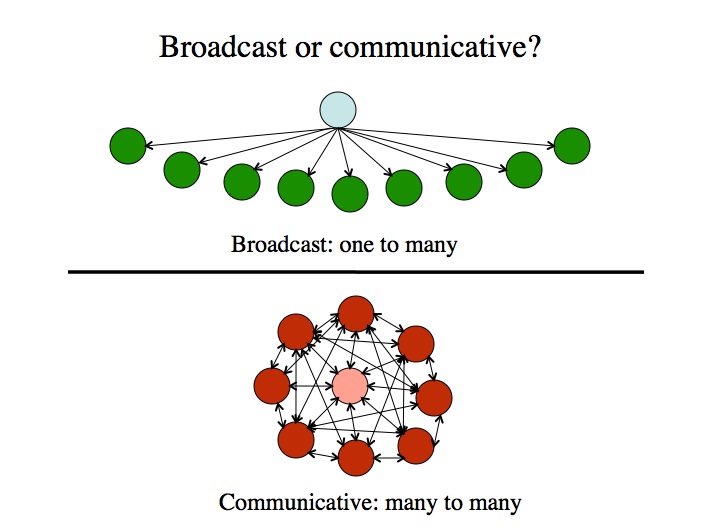
(Picture1) source:Broadcast-or-communicative-2.jpg
Modes of communication is a concept based on which Leah A.Lievrouw & Sonia Livingstone (2010) unfold the discussion on the social shaping of new media. It offers me a unique perspective to observe the gradual transition of how people communicate and socialize online, from one-to-many frame to blending modes, which discretionarily combine one-to-many frame, one-to-one frame, and many-to-many frame. The structures of the one-to-many frame and the many-to-many frame are quite different. In one-to-many mode, the flow of information is presented as a one-way link between a core node to the others, but the many-to-many frame is more multiplex with nodes linked to each other.
For example, people are using rating systems to rate restaurants or online shops, leaving comments below friends’ posts, sharing favorite movies and songs. In these cases, by integrating these interactive functions into applications, companies are active in servicing people to foster connections to each other and consequently form communities. Linked hypertexts preceded linked people, as The Machine is Us presented. That is to say, this process is driven by technologies. Without technologies, like the Internet, database, Open Source software, and so forth, we can hardly believe that all these would come true.
- Augmented Social Influence

(Picture 2)source:https://387b72ivq1z3mni0n261y7l1-wpengine.netdna-ssl.com/wp-content/uploads/2017/01/social-media-influencers.jpg
Influence is one of the consequences, not the prerequisite, of communicating and socializing under the condition that both practices are less mediated by technologies. People freely express themselves, speak out their ideas, meanwhile, voices can be equally heard by listeners, and then listeners may keep quiet, or ask questions, or agree or disagree with speakers. All these are signs of influence, which are produced by communication and socialization. It is similar to the example given by Neil Postman in Amusing Ourselves to Death, many of the first fifteen U.S. presidents could probably have walked down the street without being recognized by the average citizen, yet all these men would have been quickly known by their written words. While, a different picture is captured in our interactions in the virtual world, where influence always goes ahead of social activities, especially when we participate in the many-to-many frame.
Admittedly, no matter offline or online, people are more willing to focus more on people with high social status, reputation, and authority, and follow their opinions, but the influence is limited. In technology-driven networks, socially recognized people’s opinions easily go virus through the Internet. As a result, their influence is augmented and even overshadows the voices from average ones. It seems that most of us cannot resist it, since user interfaces are well designed to show us the number of followers, likes, and rating scores.

Just like Nosedive, one episode of Black Mirror. It depicts a society where the main social activity is to rate each other whenever on a scale from 1 to 5. The core rule of it, mid to low range folks' ratings do not carry as much weight as those from quality people, which indirectly entails a nosedive towards final tragedy, is terrifying. I regard it as a critical metaphor of how technology has an impact on the way of communicating and socializing online. It would be miserable that people blindly trust the influencers, follow their opinions, and even broadcast them merely because of influencers' great social influence. At that time, influence will undoubtedly supersede words as the most essential tool of social communication. We should be wary of it.
- Nonverbal Communication
Before the birth of visual images and television images, people predominantly used verbal skills to express themselves, and employed beautiful logic to persuade the listeners, and catch up with friends in chat rooms via texts. Gradually, people adopted images as a supplemental way of communication and socialization, finding images concise, efficient, and hilarious. I believe the majority of us used, or are using emoji, which is a typical form of images existing in virtual interactions, to communicate with other people online. It comes from facial expressions and gestures existing in communication and socializing in real settings. Thanks to the development of visual image technologies and their pervasion among the mass, we witnessed the proliferation of emoji. What’s more, interestingly, as we download applications from the market, emoji is already a default embedded configuration in many of them. It is fair to say that emoji is an inseparable part of our discourses.

These days, the news that Trump signed executive orders banning US transactions with TikTok to ByteDance grabbed tremendous attention in China. Although I have never been a user of TikTok, I found interested in and astonished at its rapid growth of popularity, not only in Mainland China but also in offshore markets. The statistics shows that as of August 2020, TikTok, excluding Douyin, has surpassed 1 billion users worldwide in less than four years. As of April 2020, Douyin has around 500 million monthly active users (https://en.wikipedia.org/wiki/TikTok). In the platform of TikTok, users spend a great amount of time in producing videos with music, where we barely hear their talks. It is in this way that those producers communicate with audiences. In contrast, Facebook, which is a platform focusing more on texts, pictures as ways of communicating and socializing, indeed feel challenges and pressure from TikTok with regard to community building. We have seen some clues indicating nonverbal communication is sharing the business of verbal communication.
😬 Thanks for reading. These are just some random thoughts triggered by week two's readings on Technology Determinism. After learning about this topic in-depth, I found that I am unconsciously advocating TD in daily life, seldom stepping away to observe our relationships with technologies. Perhaps, this time is an exception :)
- Statistics of TikTok:https://en.wikipedia.org/wiki/TikTok


Hi Hengzhi,
ReplyDeleteWhat a thorough response to our readings! I really liked your images on the modes of communication, comparing broadcast communication to communicative. This brought to mind the Pareto Principal, more commonly known as the 80/20 rule. The rule proposes that 80% of results come from 20% of the action, which can apply to so many scenarios. But is TD changing this? Do more than 20% of patrons now write an online restaurant review? Do more than 20% of your friends comment on or "like" your social media posts? Using technology as the medium, are users changing the 80/20 rule, and changing outcomes? It is just one of the many concepts to question when trying to decide what is the real influencer.
I also agree with you regarding the use of emojis. I often wish I could add them to all types of communication, to provide emphasis, levity, or compassion to writing. Yet in the spirit of formal writing, emojis do not belong everywhere, and therefore should remain separate from any type of formal communication. We can't be taken seriously if we are not serious (insert thumbs up emoji).
Hi Christine,
DeleteThanks for your comment. It is interesting to learn about the Pareto Principle you put above. I also saw a similar concept in this week's reading. Your questions are truly inspiring. Regarding the question of whether technologies are changing 80/20 rule, from my point of view, technologies seem to make this rule more solid. Even though the fact that technologies boost people's participation in media is undeniable, an algorithm that is used to rank the comments by likes can not evenly distribute exposure of each comment. In this case, influencers' comments are more likely to be ranked at the top. In this regard, this small amount of people do contribute to the largest portion of results.
Hi Hengzhi,
ReplyDeleteThe points you said are exactly what I found in the online communication. You mentioned that sometimes 'people blindly trust the influencers, follow their opinions, and even broadcast them', which can lead to terrible results. When I browse social media, I often click 'comments' to see what the opinions are approved by everyone. Perhaps we will be more likely to question ourselves if this continues? Or lose the ability to think?
Besides, your opinions towards emoji are also interesting and impressive. Emoji can often help me express my emotions. Sometimes chatting without emoji seems to make people feel stiff and indifferent. This is also the change that technology brings us.
Hi Jiaqi,
DeleteThere are some moments when I found that I just wanted to, and fortunately, was able to communicate with friends only by using emoji. What a powerful tool it is!!😆
I agree with you that you are more likely to question ourselves and lose the ability to think if we always follow the most popular opinions without considerations. I think a good way of avoiding this situation is to view them afar and consider independently.
Hi Hengzhi,
ReplyDeleteI really enjoy reading your post and I agree on lots of the ideas that you proposed. Recently, I talk about the verbal communication culture and written communication culture before the digital ages with my friends. And I realized how different they are compare to what we have nowadays. Although the communication become faster and broader, lots of negative effects emerged. There are so many examples that teenagers blindly follow idol's actions which cost really bad consequences. I start to wondering if we are going to use this kind of communication methods and functions, what are the ways that we could actually improve or change to generate a secure and healthy circulation of discussion and information?
Hi Cathy,
DeleteGood questions !! We need to consider how to generate a secure and healthy circulation of discussion and information. I propose that education would be a possible solution. In many eyes of us, education is a good solution to many sorts of social ills. I think it truly is. Education can help people to build up their independent value systems, gain the ability to screen out useful and needed information from the overwhelming information world. Many solutions deserve to be tried out. Hopefully, we can find out plausible and efficient solutions.