BLUEPRINT: An Online Learning Community Bridging the Academic World and the Real World of Educational Technology
I want to create an online learning community(OLC), facilitating the process of learning and teaching of educational technology.
- As many connections as possible
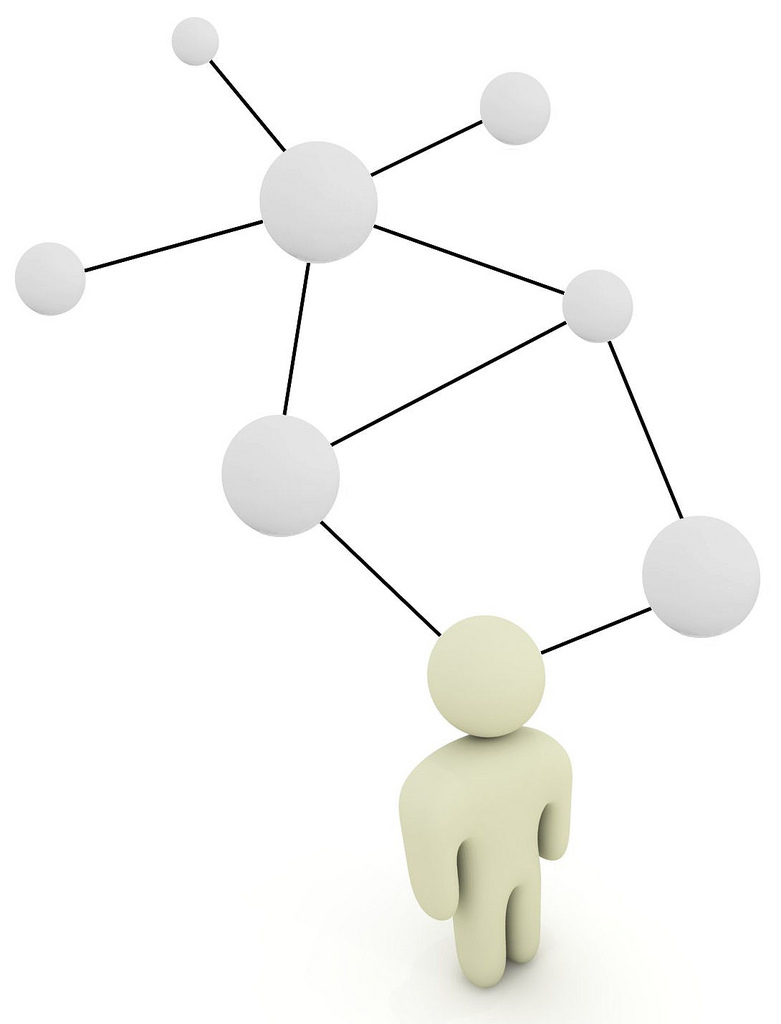
The forge of this online learning community aims to achieve three goals.
- To facilitate the interactions and communications among people who are having interests in, or pursuing a degree in, or working in the field of educational technology and related ones. Despite many websites focusing on the topics of educational technology and e-learning, they are more like information ports where people can access articles, books, events, resources, and so forth. We barely have an OLC to deliver courses, offer free space for cross-college, or cross-company, or cross-identity (student&instructor, employee&employer, developer&user) interactions and communications.
- To usher students into the industry. By this, I mean that not only can students find the courses and resources to use, they also can be connected to practical opportunities to prepare for the transition from students to industry employees afterward.
- To narrow the gap between technology developers and the users, especially the teachers in school settings. Generally, due to the lack of such conversations, teachers are not well trained to make the optimal use of educational technologies and integrate them into classrooms. Also, teachers are more likely to fall behind the trends, which is rapidly changing and innovating, without connections to technology creators.
- Extend networks outside of the community

Based on the goals depicted above, I see this community as an open neighborhood, which covers up the academic world as well as the real world, the development labs as well as the usage scenarios, instead of a closed space confined to a specific group of people. Additionally, Siemens (2005) argued that the ability to extend our networks is essential to the amplification of learning, knowledge, and understanding in the digital age. In this respect, enabling the members of the community to build up their pipe systems linked to other people and organizations is the core of the design. Therefore, apart from the fundamental softwares (e.g. Microsoft wares), what else I can imagine is to include social media, management softwares, and cloud spaces to help with this process. Social media allow users to share content in the community to other social platforms, like Wikipedia, Facebook, Behance, and etc, and vice versa. Management softwares allow users to manage learning resources, plan out learning processes, track learning goals, and create agendas. Since users are free to save their favorite content to personal accounts, by which they can customize their own learning experience, cloud spaces are important to implement this function.
- Five motivations drive users' participation
When it comes to learning theories, motivation is one of the key elements affecting the learning process from the start to the end. Motivations to participate can be different depending on the type of community (Dabbagh & Kitsantas, 2011). While considering how to attract people to start their learning experience here, it is necessary to analyze what motivations drive the potential members to transit to official ones. According to Paterson (2014),
the majority of the participants identify the following areas as helpful in their online learning:1) independence and ownership of working practices, 2) tutor support, 3) meaningful relevant materials, 4) course access and design including helpful time frames, and 5) sharing professional practice.
The first point stresses personally-designed learning experience. To fulfill this need, the user page is designed to serve as a learning resource management space where users can see the ongoing and finished courses, trainings, projects, scheduled events, and posts. The second one is a motivation unique to OLC. Leaders may help improve the community, to prevent abuses that they have experienced, or to mentor newcomers (Preece& Shneiderman, 2009). Every course will be designed and led by an instructor regarding the contents and activities. The activities outside of the curriculum, like the discussions, forums, workshops, etc, will also have appointed leaders. Point 3 and point 4 can be achieved by the effort of instructors and developers. The former should take responsibility for choosing relevant resources and launch relevant activities. The latter should take responsibility for making the design as user-friendly as possible to make it easy to access resources. The last point is associated with social presence and user interactions, and it will be explained in the next part. It is clear that these five factors not only affect the establishment of the community but also affect the sustainability of it.
- Social interactions: interpersonal and inter-organizational
The social sphere (involving social presence), which emphasizes collaborations among users to learn from each other by sharing ideas freely, ensures deep and meaningful learning experience in cooperative with the cognitive sphere ("Creating a Powerful Fully Online Learning Community," 2017). The video is inserted below👇
In this modal, share, social, learning are all linked together. Learning exists in the process of socializing and different types of social interactions are at the central place. I imagine that there are two main types of interactions in the community: interpersonal interaction and inter-organizational interaction. Interpersonal interactions refer to the interactions among learners, between learners and instructors, between technology developers and technology users. We expect to realize this by allowing members to post, comment, like, save content, and make announcements, and chat. Users need to possess the ability to produce multimodal posts, including writing, image, video, and so forth, to share ideas. Since users can form organizations (course group, interest group, project team, studio) in the community, inter-organizational interactions emerge then. For example, studios can reach out for cooperations with companies or organizations in the industry via the platform. Development teams can provide introduction conferences and training workshops to schools or companies.
- Nonymity conditions of the community
Profiles play a significant role in the identity constructions of users. Considering what kinds of profiles we expect users to have, we need to set the tone —anonymous or onymous— first. "The nonymity conditions of an online environment can affect identity production", and users are more likely to present a real self instead of "hidden selves" (Zhao, Grasmuck, & Martin, 2008). Therefore, this OLC should be characterized by nonymity, which is a trait inherited from formal learning and the academic world. In profiles, some certain information should be provided, like real name, educational background, working experience, contact, academic interests, and so forth. It can help other members get to know more about you and trust your contributions. There are three types of users in the community: instructor, learner, and organizations/companies. The role of the users will be marked out, and different information will be put in profiles. For instance, instructors have to elaborate on academic information, like educational background, research interests. In this way, they can build up their professional and experienced presence in the community, ensuring a good start of the whole journey.

Hi Hengzhi,
ReplyDeleteI like your ideas that building an online learning community that support integrate educational technologies into classrooms and bridge the gap between identities. This post demonstrate a persuasive online learning community that supported by research you did. Another idea sounds interesting to me is the profile, which can be set both onymous and anonymous. It is really helpful when the user want to share their opinion but hesitate to get some troublesome attention and when introvert have their voice on the Internet but not prepared to let people know him/her.